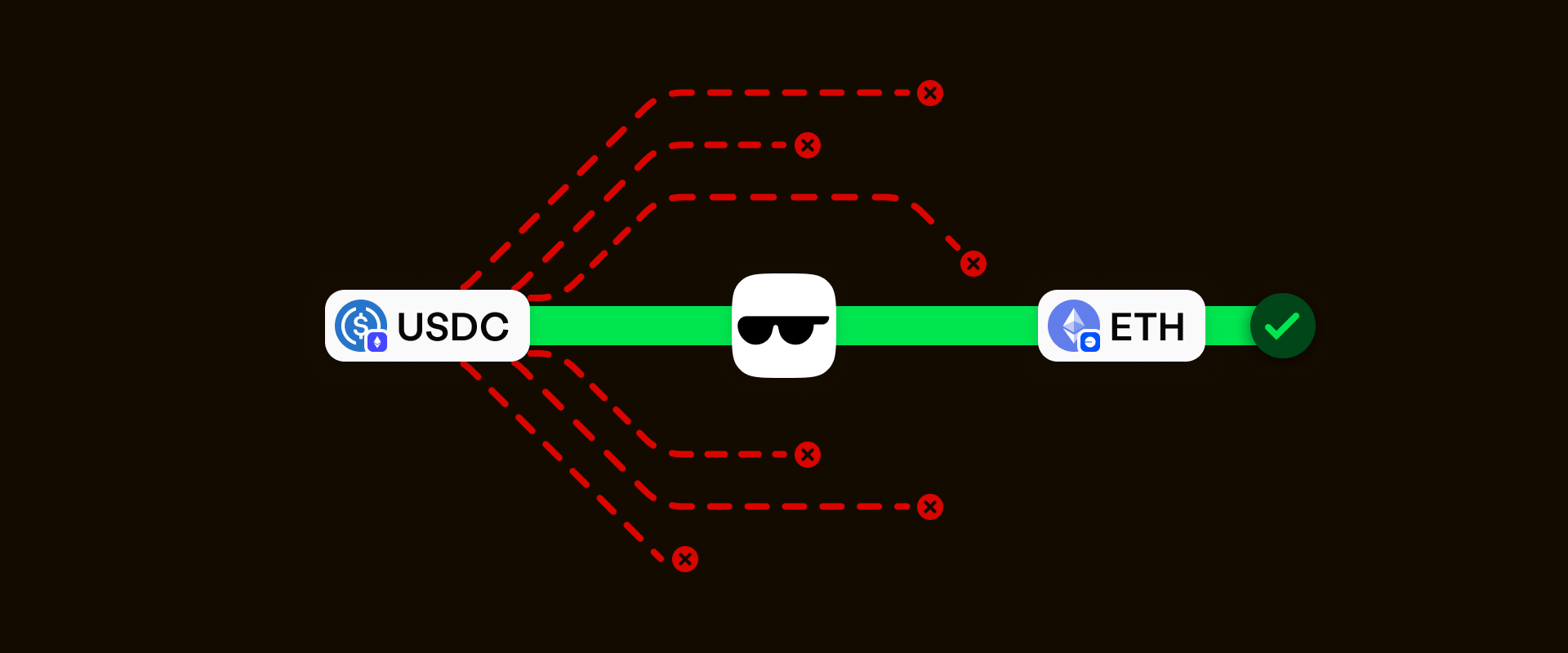
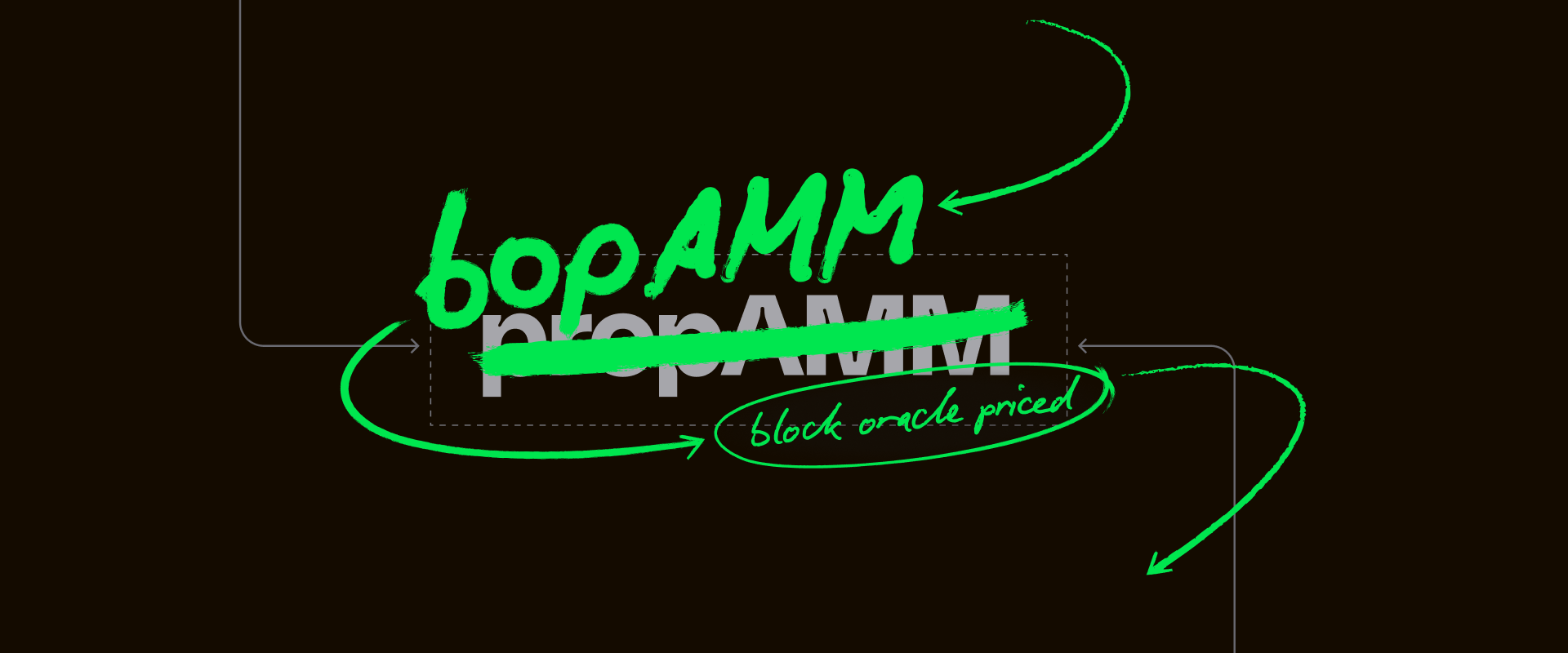
Introducing bopAMM (Block Oracle Priced AMM) private beta on Ethereum.
The recent most consequential development in onchain trading began with a simple realisation. Onchain markets, when given accurate real-time price information, can outperform centralised venues.
Solana pioneered propAMM designs as low latency and rapid block times made it possible to rethink how onchain markets should function. This development took the ecosystem by the storm and is expanding to Base and beyond.
This breakthrough needn’t be reserved to fast chains or centralised sequencers. Today, Bebop is introducing bopAMM, the new execution primitive for Ethereum that brings this next chapter of market structure to the deepest capital base in crypto. Block Oracle Priced AMM is a product of coordination within the ecosystem and offers the Ethereum-native architecture.
Ethereum is where the most economically meaningful onchain transactions settle: the deepest DeFi TVL, the blue-chip collateral, the stablecoin rails, the institutional capital. In such a capital-rich environment, execution quality cannot be treated as an optional feature.
Best execution emerged in traditional markets as a fiduciary obligation: the responsibility to deliver returns must not be undermined by poor execution. Blockchains, and more recently tokenisation of assets beyond native crypto, have broadened access to capital markets. Investors can now deploy capital directly onchain, or indirectly through curated vaults, structured products, treasuries, and automated strategies.
This has democratised participation, but it has also imported a familiar requirement: capital deserves high-quality execution regardless of whether it is managed by a global institution, a DAO treasury, or an individual user.
Imagine an Ethereum where every block carries a fresh, executable benchmark price, aggregated from multiple competing market makers, published transparently, and incorporated by block builders before any trade is sequenced.
In that world:
Enter bopAMM.
Bringing oracle-driven market structure to Ethereum comes with two elephants in the room.
First: how can continuous price discovery be reflected within the discreet nature of 12-second blocks?Second: how can frequent benchmark price updates remain economically viable so that the cost of coordination does not outweigh the execution improvements?
Both problems share one answer: coordination.
bopAMM (Block Oracle Priced AMM) is the coordination layer that makes oracle-driven execution viable on Ethereum. It aligns the participants who already exist in Ethereum's block production and trading flow into a unified execution path.
Market makers continuously provide firm executable quotes and commit capital to fill trades. Their combined depth and tighter pricing form a shared benchmark with executable size behind it.
Block builders receive the oracle update and incorporate it into candidate blocks. They continuously rebuild as new information arrives, ensuring the benchmark is as fresh as possible at proposal time, and ensuring trades are sequenced after the update so execution occurs against current market conditions.
Takers trade permissionlessly against bopAMM liquidity onchain, either directly or via aggregators, wallets or dapps. Because bopAMM pricing is driven by coordinated quote formation rather than directly inferable pool curves, participants who rely on transaction pre-simulation also consume pricing and liquidity information offchain.
bopAMM operates as the neutral coordination layer that connects all of them. It aggregates firm quotes from competing makers, publishes the shared benchmark to builders, distributes auditable data to all participants on equal terms, and monitors for spoofing or false quoting that would degrade trust in the benchmark.
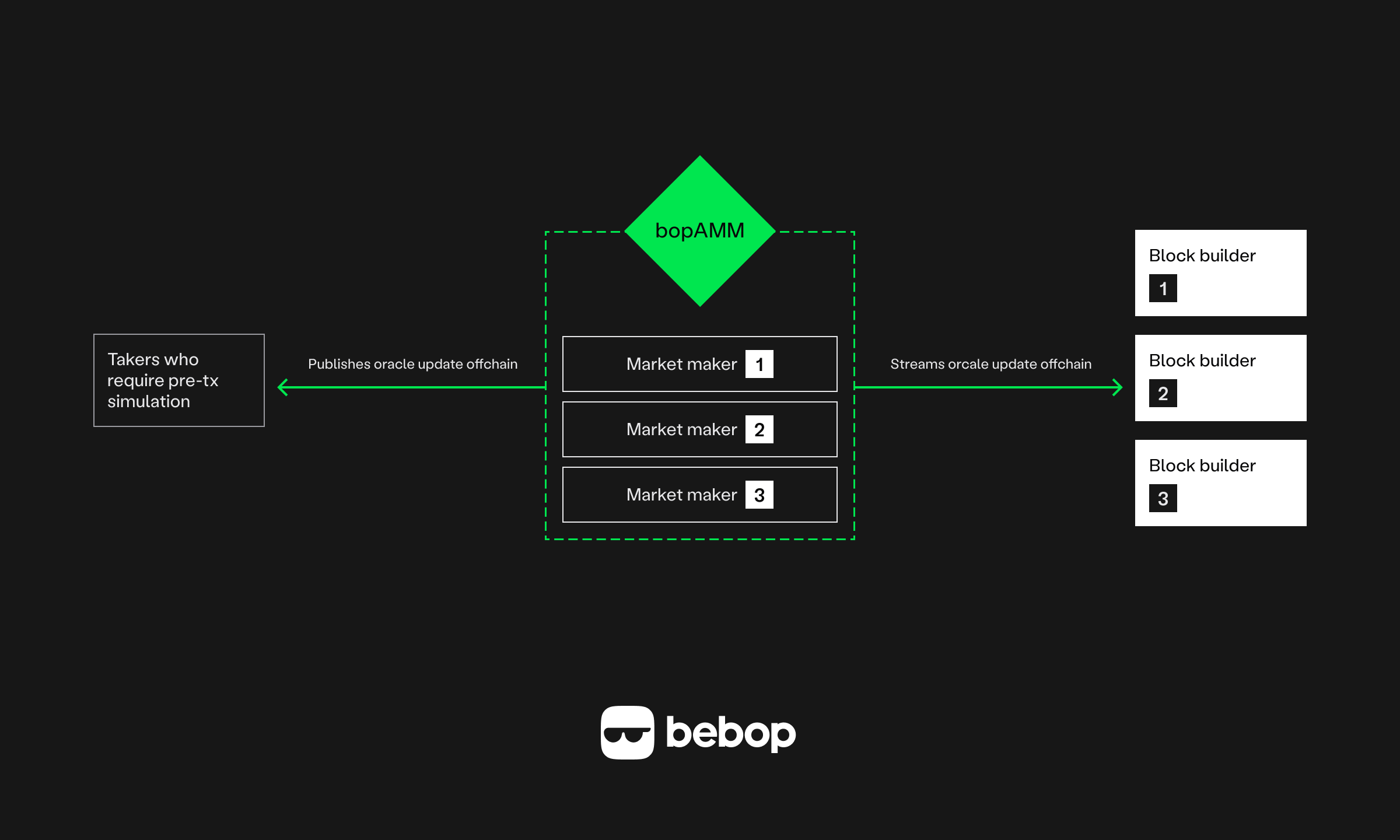
bopAMM is in private beta with partners across all three roles: market makers committing capital and quotes, block builders integrating the oracle update, and onchain routers directing user flow.
As we work on bringing bopAMM to fully-scoped production launch, three important wider initiatives have emerged, extending the work into the broader Ethereum infrastructure.
We're building bopAMM with a clear objective: bring best execution to Ethereum in an open, transparent, and universally accessible form.With a number of existing integrations and commitments, we are extending the Private Beta invitation to more partners. If you're a market maker, block builder, aggregator, solver, protocol, or sophisticated taker interested in early access, we'd love to get you involved