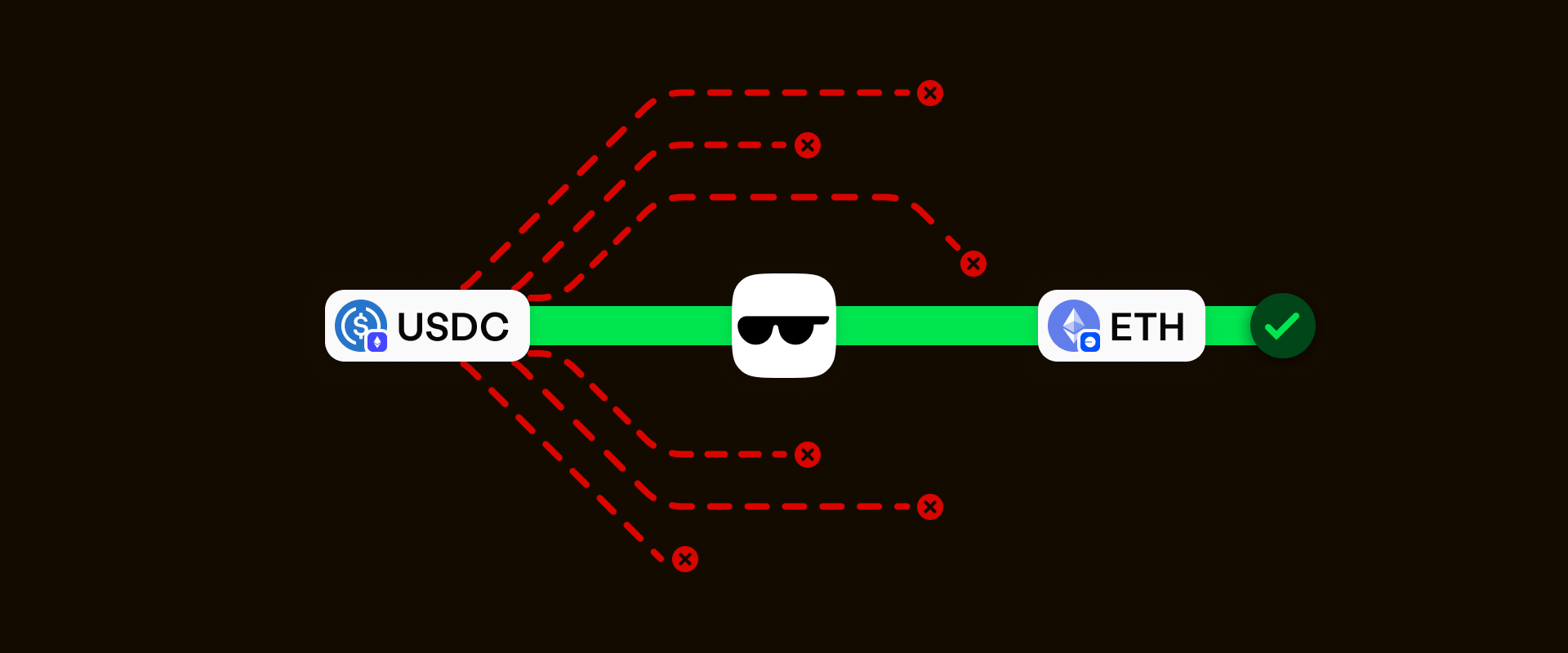
Building DeFi native execution models for the next wave of onchain adoption.

The greatest contradiction in crypto is that the technology crypto assets are native to is not particularly suitable for trading. To gain the upside of trading onchain (self-custody, permissionless access, and composability), traders have to accept that most crypto volume happens offchain (resulting in arbitrage flow, wider spreads, and slower speeds). These tradeoffs come from the fact that blockchains must conform to a fake world where prices can only update with blocks, but the assets they house can be traded offchain with no such delay. With the growth in tokenized Real World Assets (RWAs), these problems become even more pronounced. Bebop solves these issues by introducing new execution models like Request for Quote (RFQ), enabling traders to connect with professional market makers who actively price assets and provide sophisticated execution. Professional market makers hedge risks however they see fit and consequently fill trades better than executing purely against onchain pools, aggregators, or solvers, especially at larger sizes on larger assets.
Trades on Bebop RFQ don’t clear through an Automated Market Maker (AMM) or Central Limit Orderbook (CLOB), nor a traditional aggregator route. Instead, on Bebop, 15+ professional market makers compete against each other to fill trader quote requests at the best possible price routed along the best possible path.
Bebop RFQs are designed for a professional/prosumer grade trading experience with features like:
These features turn onchain liquidity from passive capital sitting in order books and pools to a competitive marketplace for liquidity which can be configured to the traders exact needs. Bebop RFQs are an alternative execution primitive that aim to make the chain, where crypto assets are born, a viable platform to also trade them. Blockchains are ultimately infrastructure to issue and trade assets on a shared ledger, and the more crypto assets can trade natively onchain without leaking value, the more the infrastructure itself becomes valuable.
The onchain market design space is naturally constrained by block times, gas costs, and consensus rules, leading to problems like:
These problems are well understood (particularly with regards to CLOBs, hence why AMMs were able to solve the onchain liquidity coldstart problem in the beginning), and have resulted in painful lessons for liquidity providers. Without new execution models, the rational choice is to trade onchain less as you are either vulnerable to arbitrage or receive worse pricing than a CEX; limiting the total capital trading in DeFi. New execution models that address these issues like Bebop RFQ can thus expand the overall onchain trading market size.
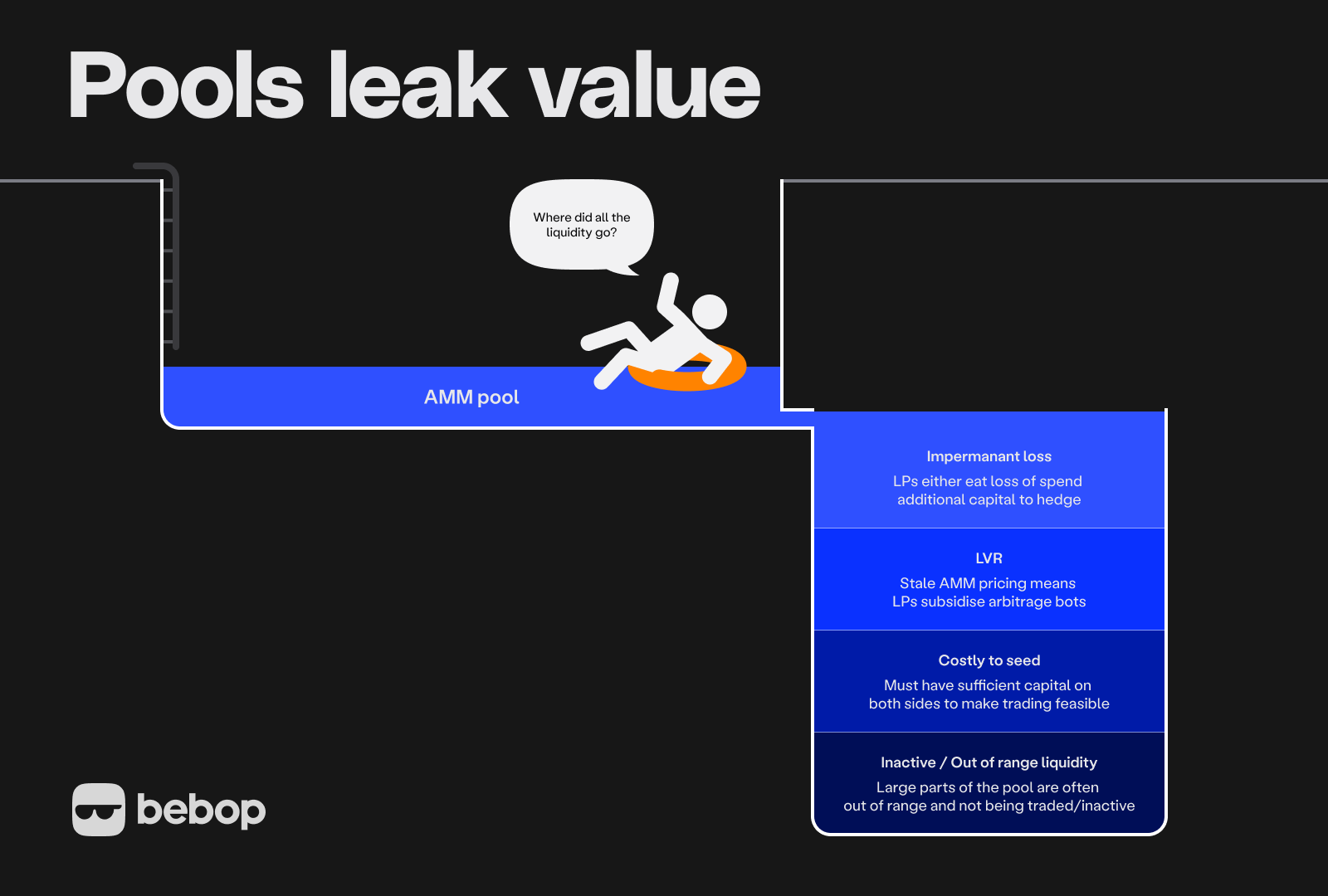
AMMs were integral to seeding onchain liquidity during DeFi’s beginnings and CLOBs are great for trading major assets in a continuous exchange with sufficient market maker liquidity like a CEX or on purpose built L1s like Hyperliquid. This leaves a large sector of assets that can benefit from onchain RFQs namely: major crypto assets like ETH, BTC, stables, and other larger cap tokens and RWAs like tokenized equities.
Bebop fixes these issues for both makers and traders as it offers sophisticated execution that can only be achieved via RFQ. RFQs are a battle tested execution model in offchain crypto OTC desks, which are gated to larger clients of CEXes and trading firms. Bebop simply brings RFQs onchain and opens them to every onchain participant, filling with the same sophisticated execution at any size.
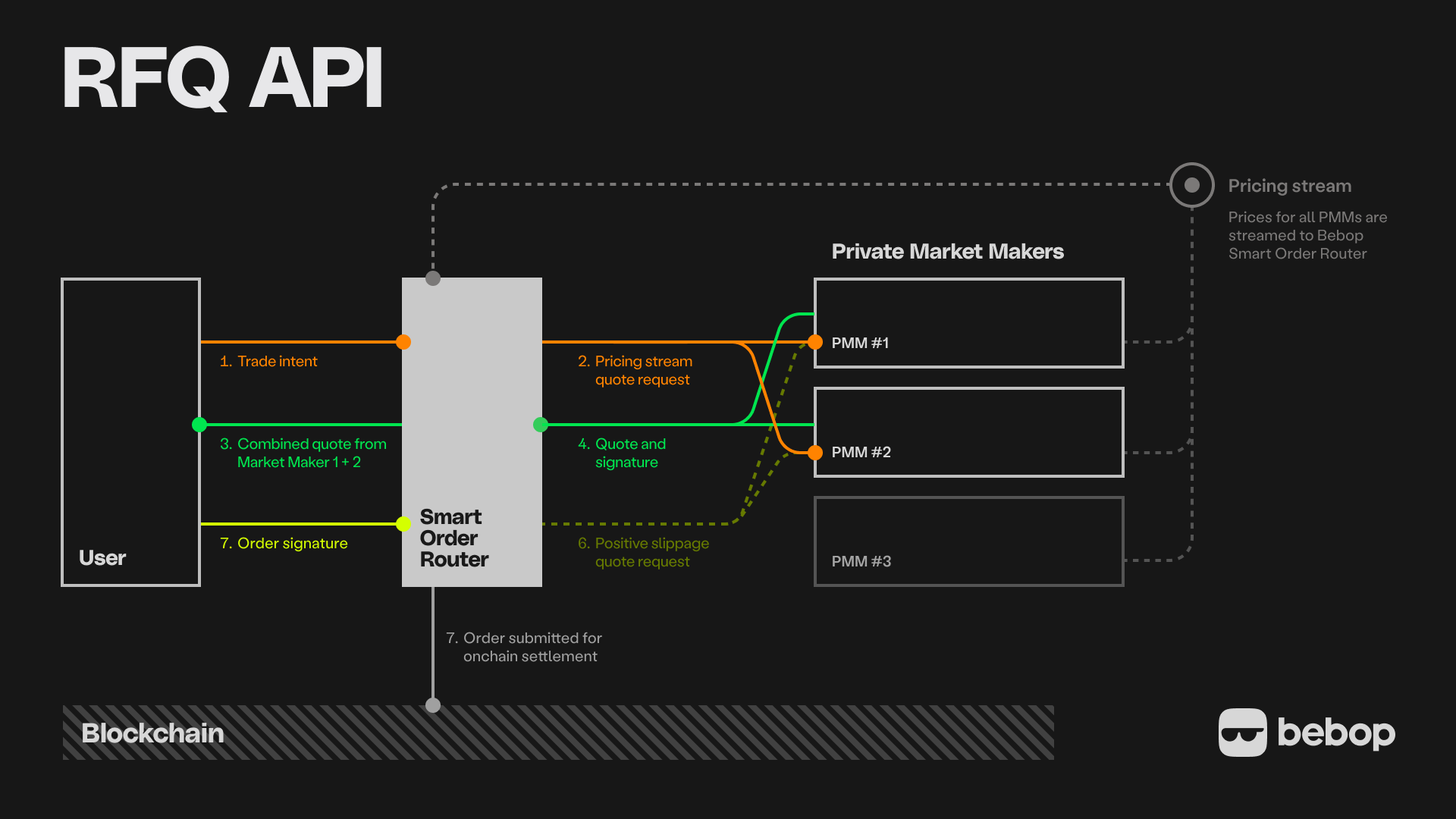
Makers hold assets in their own wallets, not AMM pools, protecting them from impermanent loss and LVR by removing the need to rebalance. They then stream pricing and available liquidity, and when a quote request comes from a trader, the Bebop router will construct the best possible fill from the maker quotes. This ensures makers have some control over what price the trade clears at and traders have some reasonable assurance that the price they fill at is an aggregate of the best available price across all makers. Because market makers are well equipped to hedge non-toxic order flow, it means they generally can offer better execution through RFQs, resulting in fairer outcomes for everybody and overcoming the limitations of onchain trading.
For RWA projects looking to solve the liquidity coldstart problem, Bebop RFQ has some unique properties that make it a better alternative to AMMs for seeding onchain liquidity. Instead of being forced to fill a 2-sided pool that is guaranteed to experience impermanent loss, issuers can quote RWAs according to their own reference prices, and in some cases, quote with zero inventory using pre and post trade atomic hooks.
For example, Monerium, a Euro stablecoin issuer, is using Bebop RFQ to bootstrap their onchain DEX liquidity.
Bebop RFQ is also well-suited to seeding initial liquidity for tokenized equities too:
RFQs can make assets which trade according to market hours like equities, available all the time. Responding to quote requests when actual trades come through is a much more viable alternative for liquidity providers than holding capital in AMMs outside of market hours. Today, professional market makers are quoting tokenized equities around the clock on Bebop, with over half of all xStocks volume coming outside of US market hours.
Why should you care if your trade is executed through onchain aggregation or a different execution model like an RFQ? Well, crypto is about building fairer systems for value transfer and economic activity. Onchain trading systems should do their best to remove hidden costs and overcome the limitations of building onchain to properly compete with offchain exchanges, otherwise there is a limit to how much liquidity can enter DeFi.
Bebop RFQ is the best solution for major cryptoassets and RWAs in this limited design space as it moves pricing from passive to active and makes it possible to trade crypto assets where they are born in a way that is better for both parties to a trade. RFQ was the first execution model available on Bebop, and in the next part of this series, we will explore bopAMM, our multi-maker propAMM product.
To learn more, check out the docs.
Integrate Bebop in your wallet, aggregator, or protocol by filling out this form.
Integrate Bebop RFQ into your wallet, aggregator or protocol by filling out this form.